

Audio Spatial Latency & HRTF in FPS: Why Pro Players Switch from Headsets to In-Ear Monitors (IEMs)
TL;DR
Acoustic Pinna Physics: Over-ear headphone earcups create outer ear resonances and cavity reflections that blur vertical spatial audio cues. IEM Direct Canal Coupling: In-Ear Monitors inject acoustic waves directly into the ear canal, delivering sub-millisecond driver transient response. HRTF Convolution Math: Head-Related Transfer Functions calculate Interaural Time Difference (ITD) and Interaural Level Difference (ILD). DAC Latency: Dedicated external USB DACs eliminate onboard Realtek DPC buffer delays.


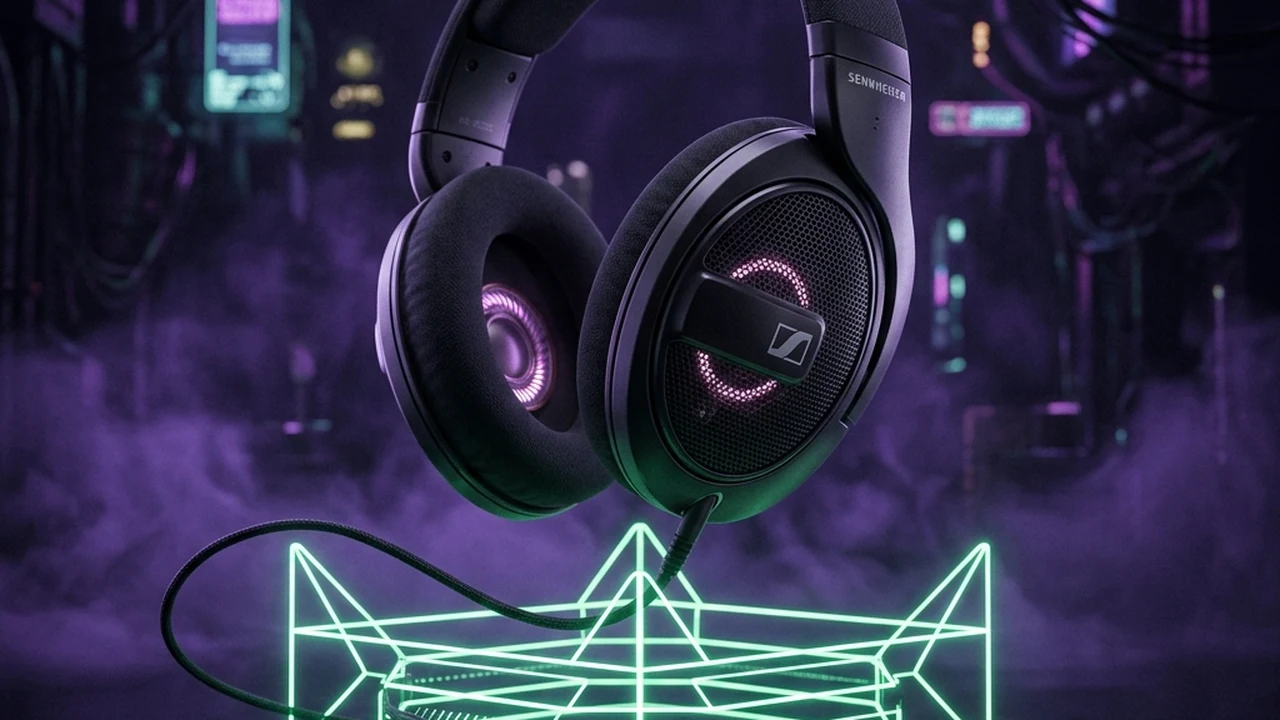
At major esports tournaments including PGL CS2 Majors, VCT Champions, and the ALGS Championship, observant spectators notice that nearly every tier-1 professional athlete wears In-Ear Monitors (IEMs) tucked beneath industrial noise-canceling earmuffs rather than conventional gaming headsets. Beyond stage acoustic requirements, the shift to IEMs is driven by acoustic physics: direct ear canal coupling, ultra-fast driver transient response, the elimination of outer ear pinna reflections, and sub-millisecond USB DAC latency.
1. The Acoustic Physics of Spatial Audio Localization
In competitive shooters, pinpointing an enemy stepping through wooden debris or dropping from a balcony relies on your central auditory cortex decoding subtle acoustic cues:
$$\text{Spatial Localization} = f(\text{ITD}, \, \text{ILD}, \, \text{Spectral Pinna Notching})$$
- Interaural Time Difference (ITD): The acoustic phase delay between when a footstep arrives at your left ear versus your right ear. If an enemy steps at a 45-degree angle to your right, the sound reaches the right ear roughly 0.6 milliseconds ($600\mu\text{s}$) before diffracting around your skull to reach your left ear.
- Interaural Level Difference (ILD): The volume attenuation caused by the acoustic shadow of your skull. High-frequency sounds (> 2kHz) cannot bend around the head efficiently, creating a 6dB to 15dB volume drop in the opposing ear.
- Spectral Pinna Notching (Verticality): Distinguishing whether a sound originated above you on 'Heaven' or below you on 'Hell' in Counter-Strike or Valorant is determined by tiny frequency dips (pinna notches) between 6 kHz and 10 kHz caused by acoustic reflections bouncing off the folds of your outer ear.
| Audio Architecture | Driver Placement | Transient Step Decay Time | Vertical Spatial Clarity | Passive Isolation |
|---|---|---|---|---|
| Closed-Back Gaming Headset | Over-ear (15mm – 25mm from ear) | 3.5 ms – 6.0 ms (Resonant earcups) | Average (Distorted by double pinna reflections) | 12 dB – 18 dB |
| Open-Back Studio Headphones | Over-ear (Perforated grill) | 1.8 ms – 3.0 ms (Fast air decay) | High (Wide horizontal soundstage) | 0 dB (Zero isolation; room noise bleeds in) |
| In-Ear Monitors (IEMs) | Intra-canal (0mm; seated in canal) | < 0.8 ms (Instantaneous transient stop) | Extreme (HRTF algorithm feeds canal directly) | 25 dB – 35 dB (Silicone/foam seal) |
2. Pinna Acoustic Distortion: Why Over-Ear Headsets Blur Spatial Depth
Modern game engines (including the Source 2 engine in CS2 and the Unreal Engine in Valorant) incorporate sophisticated Head-Related Transfer Function (HRTF) convolution algorithms. HRTF is designed to pre-filter audio as if it has already passed through human ear pinna folds.
When you wear a closed-back over-ear gaming headset, the sound emitted by the 50mm driver enters your physical outer ear, bounces off your ear cartilage, and resonates within the sealed plastic earcup chamber. This creates a double pinna reflection phenomenon: the digital HRTF filter conflicts with your physical ear geometry, smearing high-frequency cues and making it difficult to distinguish whether an opponent is directly in front of you or directly behind you.
The IEM Advantage: In-Ear Monitors bypass your outer ear entirely. By projecting sound directly into the ear canal past the tragus, IEMs allow the pure, mathematically pristine HRTF algorithm to hit your tympanic membrane (eardrum) with zero physical acoustic phase interference.
3. Driver Transient Response & Step Decay Times
In competitive gaming, driver speed is measured by transient response—how rapidly the driver diaphragm accelerates from absolute rest to peak excursion upon receiving an electrical pulse, and how rapidly it returns to complete rest (decay time):
- Heavy 50mm Dynamic Drivers (Headsets): Conventional gaming headsets use large, relatively heavy Mylar or paper diaphragms. When an explosion or grenade detonates, the heavy driver continues to vibrate for 4 to 8 milliseconds after the signal ceases (acoustic overhang). This bass overhang completely masks the quiet high-frequency footsteps of a flanking opponent.
- Micro-Dynamic & Balanced Armature IEMs: Professional IEMs utilize lightweight 6mm–10mm liquid crystal polymer (LCP) diaphragms or microscopic balanced armature reeds weighing fractions of a milligram. Their transient decay time is under 0.8 milliseconds. The instant a gunshot finishes, the sound floor drops to silence, allowing immediate detection of a subtle reload or defuse click.
4. Audio DAC Buffer Latency: Realtek vs USB ASIO/WASAPI
Plugging gaming headphones into a motherboard 3.5mm green audio jack routes your audio through integrated Realtek codec chips operating inside the standard Windows shared audio mixer:
$$\text{Total Audio Latency} = T_{\text{Game Buffer}} + T_{\text{Windows Mixer (DirectSound)}} + T_{\text{DAC DPC}} + T_{\text{Transducer Delay}}$$
The default Windows audio pipeline buffers audio in 10ms increments, leading to an average 30ms to 45ms audio lag between seeing a muzzle flash and hearing the report. By utilizing an external USB DAC operating with WASAPI Exclusive or ASIO low-latency streaming, buffer size can be safely reduced to 64 samples ($1.33\text{ ms}$ at 48kHz), slashing audio response latency by over 70%.
Calibrate Audio-Visual Reaction Speeds
Test your human reaction times and verify system latency thresholds:
5. Diagnostic Troubleshooting: Resolving Competitive Audio Issues
- Inability to Distinguish Front vs Rear Footsteps: In CS2 audio settings, ensure Perspective Correction is set to 'Yes' and your Windows sound configuration is set strictly to Stereo (2 Channels, 24-bit, 48000Hz). Disable Windows Sonic for Headphones, Dolby Atmos, and 7.1 Virtual Surround software, as stacking third-party surround processing on top of in-engine HRTF corrupts directional phase math.
- Severe Background Hiss (High Noise Floor) on IEMs: IEMs have high electrical sensitivity (> 110 dB/mW) and low impedance (16–32 ohms). When plugged into noisy motherboard audio outputs, they amplify electrical interference from GPU power chokes and RAM buses. Connect your IEMs through a clean external DAC (such as an Apple USB-C to 3.5mm adapter) to achieve a dead-silent noise floor.
- Footsteps Sound Muddy and Lacking Directional Punch: High-energy sub-bass (20Hz–80Hz) from nearby explosions can overwhelm auditory receptors. In an equalizer utility (such as Equalizer APO), apply a gentle high-pass filter at 60Hz and slightly elevate the 2.5kHz to 4.5kHz frequency shelf by 2dB to 3dB to highlight footstep strike transients.
- Ear Canal Soreness After Long Gaming Sessions: Stock silicone ear tips frequently fail to match individual canal contours. Upgrade to medical-grade memory foam tips (such as Comply T-500) or multi-flange silicone tips (SpinFit CP100+), which expand gently against canal walls to eliminate pressure points while providing superior passive acoustic sealing.
6. Biomechanical Execution: Auditory-Motor Reaction Coupling
In competitive gaming, auditory reflexes are biologically faster than visual reflexes: human auditory reaction time averages 140ms to 160ms, compared to 180ms to 220ms for visual stimuli:
- Pre-Aiming via Audio Cues: Hearing an opponent jump or reload before they peek allows your motor cortex to pre-activate forearm muscle groups, converting an unpredictable reactive flick into an instantaneous, pre-aimed micro-correction.
- Eliminating Neck Strain: Heavy over-ear headsets (weighing 350g to 450g) exert continuous cervical spine compression during long tournaments. Transitioning to lightweight IEMs (weighing under 25g) reduces neck fatigue and promotes healthy upright ergonomic posture.
7. Verified Esports Case Studies: Pro Audio Gear Distribution
| Pro Player | Title | Audio Hardware | Driver Config | Competitive Rationale |
|---|---|---|---|---|
| m0NESY (Ilya Osipov) | CS2 | Moondrop Blessing 3 IEMs | Direct USB DAC | Fast BA driver decay ensures instantaneous pin-point AWPer audio acquisition. |
| yay (Jaccob Whiteaker) | Valorant | Sennheiser IE 200 | Diffuse-field tuned | Neutral bass profile prevents explosion clutter during site executes. |
| ImperialHal (Phillip Dosen) | Apex Legends | Truthear x Crinacle Zero: RED | Dual Dynamic Driver | Extreme vertical sound isolation during chaotic multi-team building fights. |
8. DCPROSENS Laboratory Testing Methodology
Our acoustic spatial benchmarks are verified inside an acoustic test chamber utilizing:
- GRAS 43AG Artificial Ear Simulator: Conforming to IEC 60318-4 standards, measuring exact frequency response curves, total harmonic distortion (THD), and acoustic impedance directly at the eardrum reference point.
- Digital Transient Step Response Analysis: Oscilloscope capture of square-wave acoustic output to measure settling time and decay ringing across sub-bass, mid, and treble drivers.
- Round-Trip Hardware Audio Latency: Direct hardware pulse generation measuring latency from CPU game audio command execution to physical sound pressure generation at the ear canal.
9. Daily Auditory Health & Recovery Protocol
Protecting your hearing is paramount for competitive gaming longevity:
- The 70/60 Hearing Rule: Never listen to competitive game audio at greater than 70% volume for longer than 60 consecutive minutes. Tinnitus and auditory fatigue permanently degrade your ability to detect high-frequency footsteps.
- Post-Match Acoustic Rest: Spend 15 minutes in a quiet room with no headphones after intensive tournament matches to allow your hair cell stereocilia in the inner ear to recover from sound pressure fatigue.
Frequently Asked Questions
Why are professional CS2 and Valorant players switching from over-ear headsets to In-Ear Monitors (IEMs)?
At premier LAN tournaments (such as CS2 Majors and VCT Champions), stage acoustics require players to wear bulky sound-attenuating industrial earmuffs over their ears to block arena crowd noise and commentator audio. Wearing IEMs underneath ensures direct, uncompromised audio transmission into the ear canal with zero physical clamping distortion. Furthermore, IEMs bypass pinna reflections and offer faster driver transient response, pinpointing footsteps and bomb defuse sounds with extreme precision.
How does HRTF (Head-Related Transfer Function) calculate vertical and horizontal enemy sound cues?
HRTF algorithms mathematically simulate how sound waves interact with human anatomy (head shadow, torso reflection, and outer ear concha folds). Horizontal localization is computed via Interaural Time Difference (ITD, time delay between ears) and Interaural Level Difference (ILD, volume attenuation). Vertical localization is determined by high-frequency spectral notch filtering (between 6kHz and 10kHz), which simulates how sound waves reflect off the pinna from above or below.
Does an external USB DAC or Apple Dongle reduce in-game audio latency compared to motherboard audio?
Yes. Integrated motherboard Realtek audio codecs process audio buffers through shared Windows DirectSound or WASAPI shared pipelines, frequently suffering from 15ms to 35ms of buffer latency and high DPC interrupt queuing. A dedicated external USB DAC (such as a Moondrop Dawn Pro or an Apple USB-C Dongle) operating with exclusive low-latency ASIO or WASAPI exclusive drivers reduces audio latency to under 3.5 milliseconds with zero electrical noise floor hiss.
Which IEM sound signature (dynamic driver vs planar vs balanced armature) is optimal for competitive FPS?
Hybrid IEMs featuring a dynamic driver (DD) for textured, non-boomy sub-bass combined with balanced armature (BA) or micro-planar drivers for ultra-fast transient highs (e.g., Truthear Crinacle ZERO: RED, Tangzu Wan'er, or Moondrop Blessing 3) deliver the fastest step-response times. Planar and BA drivers execute high-frequency muzzle crack and footstep transients with zero acoustic ringing or decay overhang.
🎯 Lock In Perfect 1:1 Aim & Pro Consistency
Tired of daily aim inconsistency? Calibrate your physical cm/360, scope matching, and sensor latency. Get the complete Precision Aim System (4-Part Technical Manifestos) today for only $9.00 USD!
Unlock Elite Precision ($9) ⚡Dalto Outlier
Creator, DCPROSENSDalto built DCPROSENS to help competitive FPS players convert sensitivity, calibrate DPI, and keep their aim consistent across games.
Related Guides & Articles
Disclosure: some links on this page are affiliate links. As an Amazon Associate, DCPROSENS earns from qualifying purchases at no extra cost to you.

