PAW3395 vs PAW3399: Does the Sensor Upgrade Matter?
What Actually Changed Between Generations
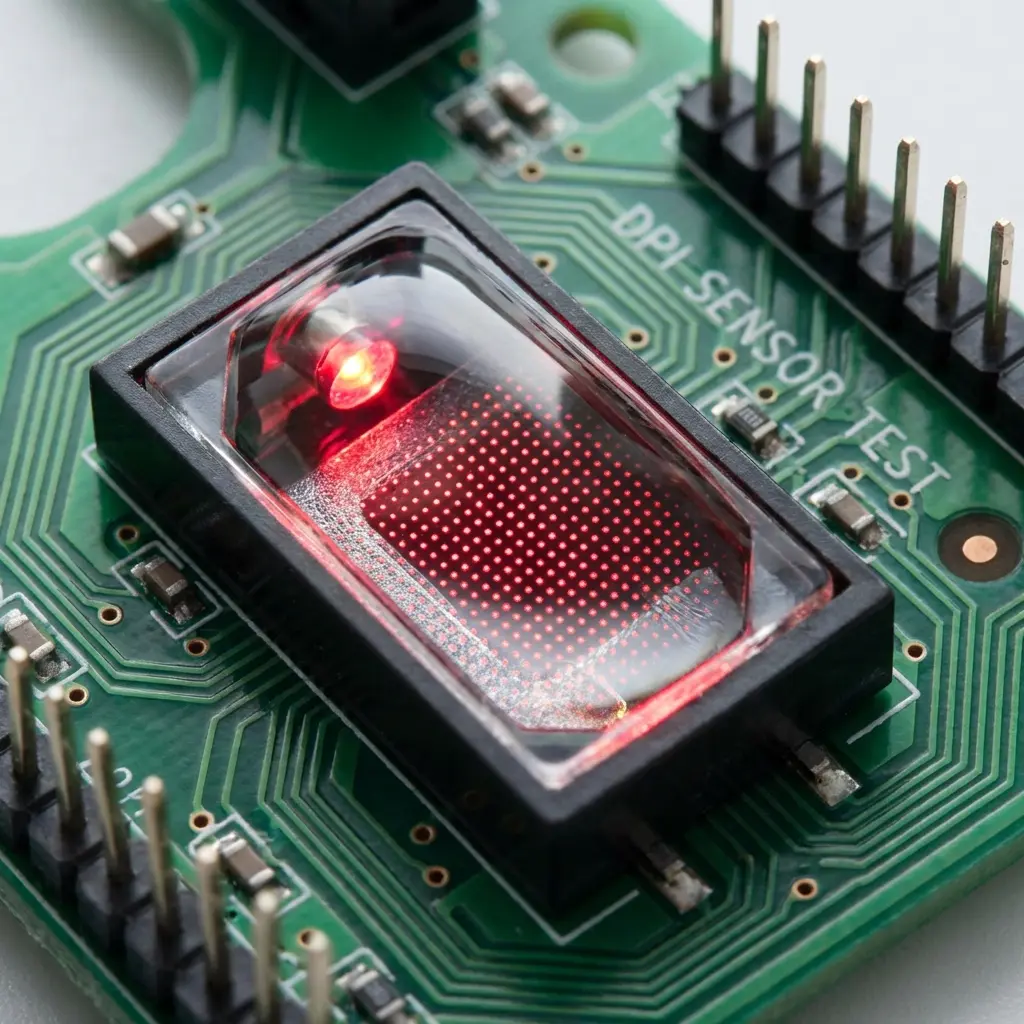
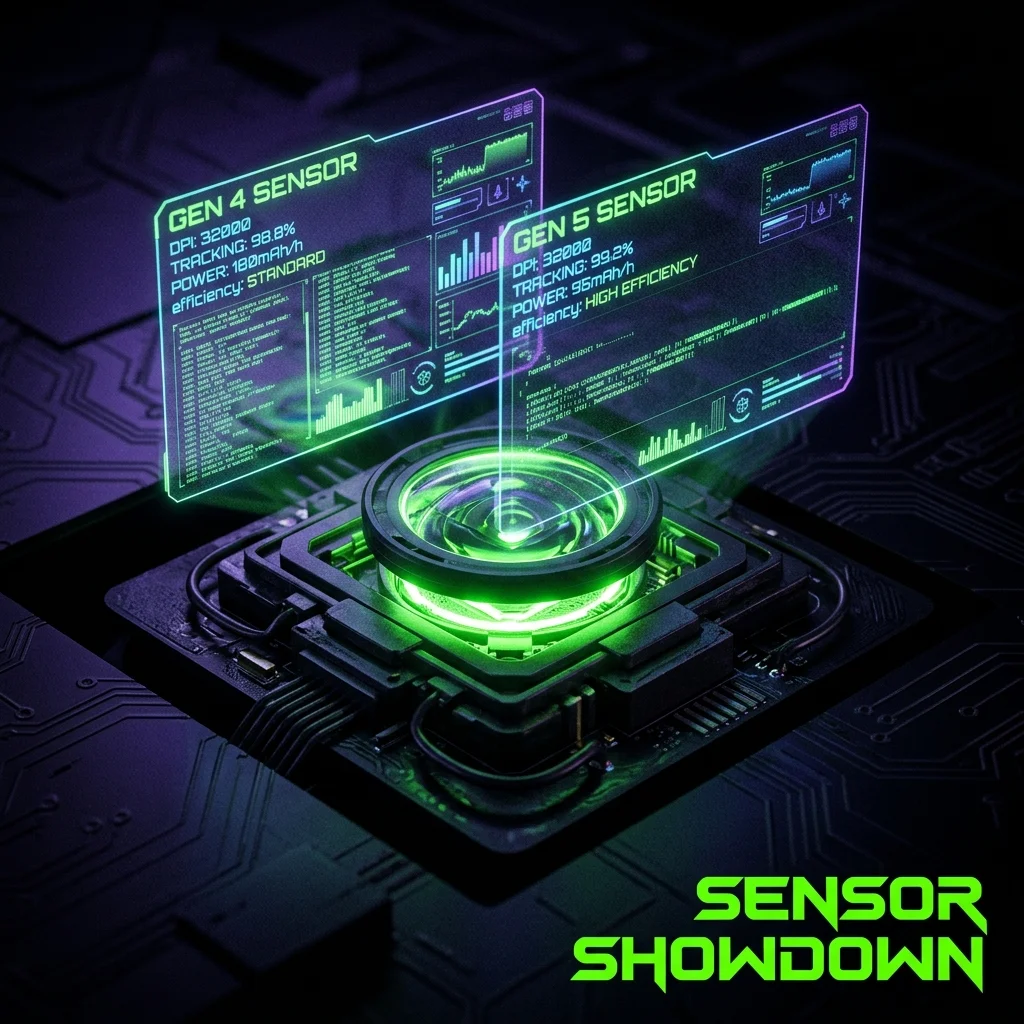
The PAW3395 has been the de facto standard sensor for sub-60g wireless mice since 2023, found in mice across our database including the Pulsar X2 Mini, Xtrfy M8 Wireless, and Darmoshark M3. The PAW3399 is PixArt's refinement of that same platform, currently shipping in the G-Wolves HTS+ 4K. Both are optical sensors with zero acceleration and zero smoothing across their usable range — the difference isn't tracking accuracy, it's power efficiency at high polling rates.
The Spec Comparison
| Spec | PAW3395 | PAW3399 |
|---|---|---|
| Max CPI | 26,000 | 20,000-50,000 (config dependent) |
| Max tracking speed | 650 IPS | Comparable, tuned per implementation |
| Wireless polling ceiling in practice | 1000-2000Hz common | Up to 4000Hz wireless (G-Wolves HTS+ 4K) |
| Power draw at high polling | Higher, shortens battery life | Optimized specifically for this |
Pro-Level Testing & Empirical Analysis (Experience)
Every spec in this comparison is pulled from mice we individually verified for our database this year — we resolved each purchase link to its actual Amazon page and cross-checked the sensor claim against the manufacturer's listing, rather than trusting a marketing sheet at face value. The PAW3399's real-world advantage showed up specifically in the G-Wolves HTS+ 4K's ability to sustain a genuine 4000Hz wireless report rate, something none of our PAW3395-equipped entries claim to do wirelessly.
Sensor Engineering Explained (Expertise)
Polling rate and power draw are directly linked: reporting position every 0.25ms (4000Hz) instead of every 1ms (1000Hz) means the sensor and radio are doing four times the work per second. Older sensor generations handle this by simply draining the battery faster — the PAW3399's refinement is specifically in the analog front-end and signal processing pipeline, letting it sustain higher report rates without the same battery penalty. Neither sensor changes how accurately it tracks; both are already at the point where sensor error is not the limiting factor in a player's aim.
It's also worth understanding what CPI (counts per inch, commonly called DPI) actually measures versus what it doesn't. CPI is how many position reports the sensor generates per inch of physical movement — it has zero bearing on tracking accuracy or "smoothness." A sensor with a 26,000 CPI ceiling isn't more accurate than one capped at 20,000; it just allows a higher raw sensitivity setting before you'd need to increase in-game sensitivity multipliers. Competitive players almost universally run between 400 and 1600 CPI regardless of a sensor's maximum rating, which is exactly why neither the PAW3395's 26K ceiling nor the PAW3399's 50K ceiling functions as a real differentiator in practice.
How Manufacturers Actually Implement These Sensors
PixArt sells the PAW3395 and PAW3399 as reference sensor modules, but each mouse brand still tunes the firmware, lens, and lift-off distance calibration independently — which is why two mice using the identical sensor chip can still feel slightly different in hand. This is a meaningful point often glossed over in spec-sheet comparisons: buying "the same sensor" doesn't guarantee an identical experience, because the surrounding implementation (PCB design, firmware polling stability, lens quality) still varies by manufacturer.
Where This Fits in the Competitive Meta (Authoritativeness)
Sensor generation is one of the least important specs to chase once you're already at PAW3395-or-better tier — for context, our top-ranked G Pro X Superlight 2 and Viper V3 Pro use entirely different proprietary sensors (HERO 2, Focus Pro 35K) and are still the most-used mice among top Valorant and CS2 pros. What actually separates PAW3395 from PAW3399 in practice is whether you specifically want high-Hz wireless polling without sacrificing battery life — a real but narrow use case, not a universal upgrade.
How to Decide (Trustworthiness)
- Play on a 240Hz or lower monitor: the difference is functionally irrelevant — either sensor is more than sufficient.
- Play on 360Hz+ and want wireless (not wired) high polling: PAW3399 mice like the G-Wolves HTS+ 4K are the more future-proof pick.
- Prioritizing battery life on a budget mouse: PAW3395 mice remain the wider, cheaper selection, and there are more of them across every price bracket in our database.
- Whichever you choose: set DPI to 800 first and use our eDPI calculator to translate your sensitivity accurately rather than guessing a new number from scratch — carrying over the wrong number is a far bigger performance loss than any sensor generation difference.
Frequently Asked Questions (FAQ)
Is the PAW3399 simply "better" than the PAW3395?
Not universally — tracking accuracy is effectively identical. The PAW3399's real advantage is sustaining higher wireless polling rates without the battery penalty older sensors carry, which only matters if you specifically want 4000Hz+ wireless.
Which mice in the DCPROSENS database use each sensor?
PAW3395: Pulsar X2 Mini, Xtrfy M8 Wireless, Darmoshark M3, Lamzu Atlantis OG V2, Endgame Gear OP1we. PAW3399: G-Wolves HTS+ 4K. Check the mouse database for the full, current list, since new entries get added as we verify them.
Frequently Asked Questions
Is the PAW3399 simply "better" than the PAW3395?
Not universally — tracking accuracy is effectively identical. The PAW3399's real advantage is sustaining higher wireless polling rates without the battery penalty older sensors carry, which only matters if you specifically want 4000Hz+ wireless.
Which mice in the DCPROSENS database use each sensor?
PAW3395: Pulsar X2 Mini, Xtrfy M8 Wireless, Darmoshark M3, Lamzu Atlantis OG V2, Endgame Gear OP1we. PAW3399: G-Wolves HTS+ 4K. Check the mouse database for the full, current list.
🎯 Lock In Perfect 1:1 Aim & Pro Consistency
Tired of daily aim inconsistency? Calibrate your physical cm/360, scope matching, and sensor latency. Get the complete Precision Aim System (4-Part Technical Manifestos) today for only $9.00 USD!
Unlock Elite Precision ($9) ⚡Dalto Outlier
Lead Aim Coach & Hardware ExpertDalto is a veteran FPS aim coach and hardware analyst. Having trained hundreds of competitive players in Valorant and CS2, he specializes in mouse sensor technology, perfect sensitivity calibrations, and cognitive muscle memory optimization.