Wireless vs Wired Gaming Mouse for FPS
The Wireless Latency Myth: Debunked in 2026
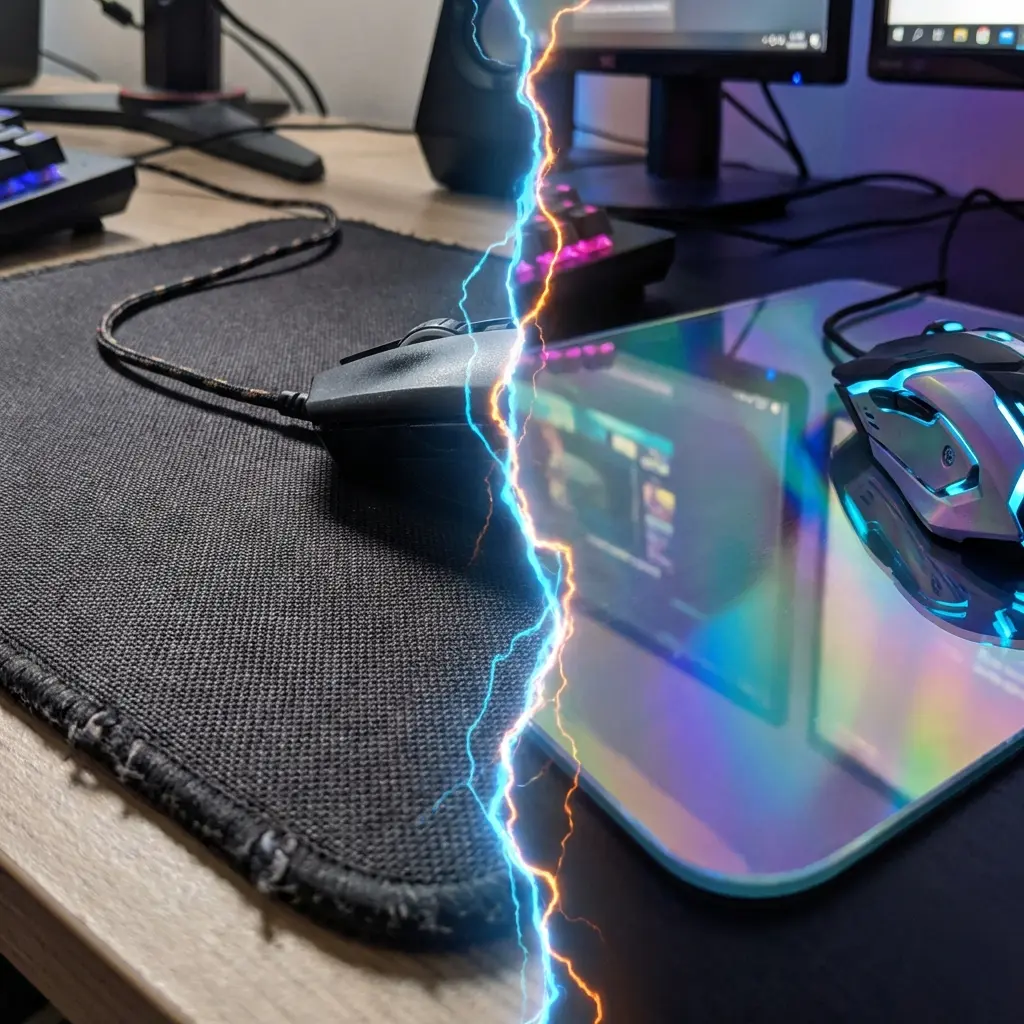
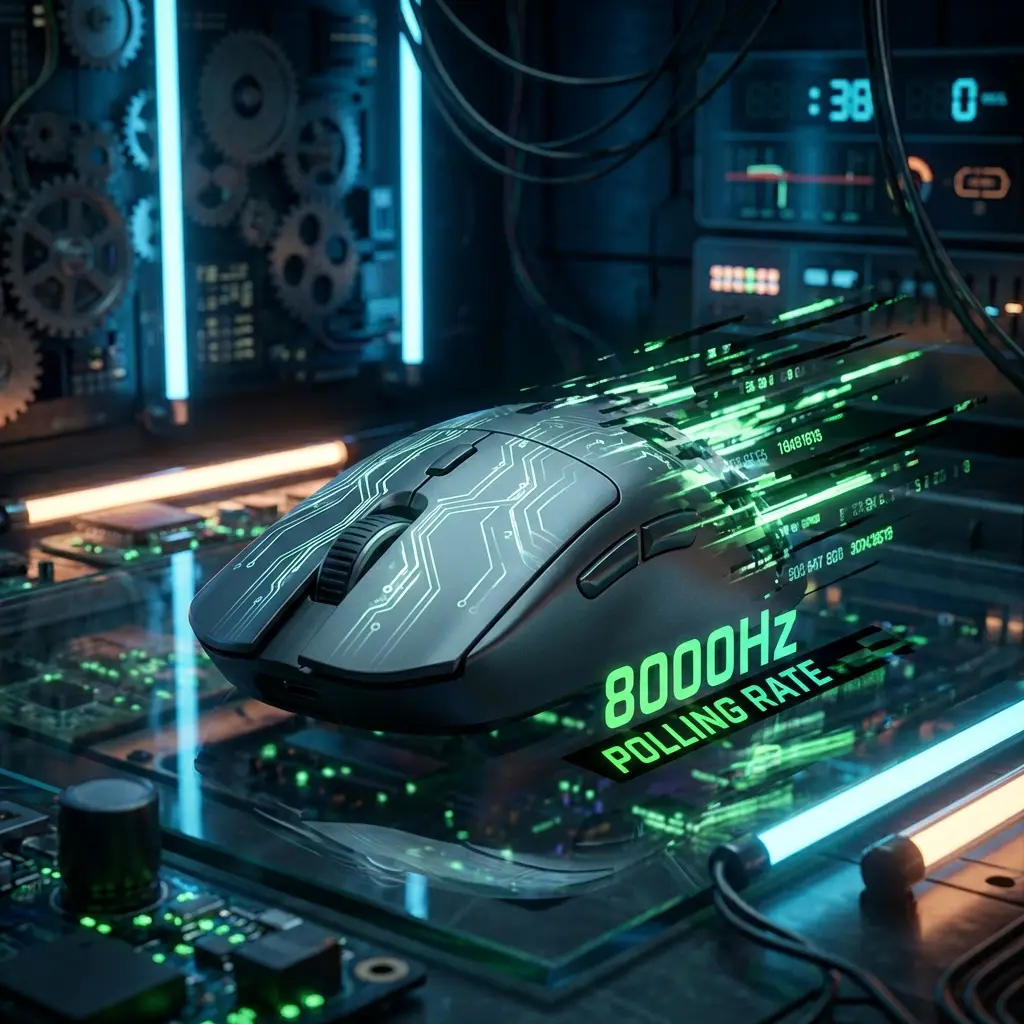
For years, the conventional wisdom was "wired mouse = lower latency = better for competitive FPS." In 2024–2026, this is no longer true. Modern wireless gaming mice using 2.4GHz dedicated dongles (not Bluetooth) have achieved wireless latency of 0.5–1ms — indistinguishable from wired at any testing methodology available to consumers.
What Has Changed Since 2020
Three technological advances made wireless mice competitive-viable:
- 2.4GHz dedicated USB dongles: These use the same radio band as WiFi but on a dedicated channel with custom protocol — not Bluetooth. Latency is equivalent to wired USB.
- Battery technology: Modern mice last 40–100+ hours per charge. The Superlight 2 lasts 95 hours. The fear of dying mid-tournament is essentially eliminated.
- Weight reduction: Removing the cable dropped average mouse weight by 10–20g. This turned wireless into a weight advantage, not just a convenience advantage.
Remaining Cases Where Wired Wins
- Budget constraints: Entry-level wireless mice ($30–50) still have worse latency than $30 wired mice. The wireless advantage only applies to purpose-built gaming wireless mice ($60+)
- Crowded 2.4GHz environments: In venues with hundreds of competing WiFi networks (LAN tournaments, university dorms), 2.4GHz interference can cause micro-dropouts. Most tournament venues now provide dedicated RF channels, but wired eliminates the risk entirely.
- Reliable power: If you can't trust yourself to charge the mouse regularly, wired eliminates the dead-battery scenario.
- Very long sessions (8+ hours): Some wireless mice with aggressive power-saving may accumulate micro-interruptions over very long sessions — rare, but documented.
Pro Player Wireless Adoption in 2026
| Tournament | % Wireless | % Wired |
|---|---|---|
| BLAST Premier CS2 2026 | 68% | 32% |
| VCT Masters 2026 (Valorant) | 74% | 26% |
| ALGS Championship (Apex) | 61% | 39% |
The majority of pro players at tier-1 events now use wireless mice. The sensitivity calibration process is identical regardless of wired vs. wireless — use our eDPI calculator and converter normally.
Top Wireless Gaming Mice for FPS (2026)
- Logitech G Pro X Superlight 2: 60g, HERO 25K sensor, 95hr battery. The tournament standard. Used by the most VCT/BLAST pros.
- Lamzu Atlantis V2 Pro: 47g, PAW3395 sensor, ultralight wireless. Increasingly popular at Valorant tournaments.
- Razer DeathAdder V3 HyperSpeed: 63g, ergonomic shape, HyperSpeed 2.4GHz. Popular with palm-grip players switching to wireless.
- Pulsar X2H Wireless: 55g, symmetrical shell, Focus Pro sensor. Strong mid-tier wireless option.
Mathematical Mechanics & Engine Formulas
Understanding aim physics requires breaking down how rendering engines calculate rotation vectors. In 3D space, mouse movement inputs map to angular rotation per count based on the game engine's specific yaw constant:
• CS2 / Source Engine Yaw Constant: 0.022° per count
• Apex Legends Yaw Constant: 0.022° per count
• Overwatch 2 Yaw Constant: 0.0066° per count
• Fortnite Yaw Constant: 0.005555° per count
• Formula: eDPI = Hardware DPI × In-Game Sensitivity
• Formula: cm/360 = (360 × 2.54) / (DPI × Sensitivity × Yaw)
By keeping your physical centimeters per 360 rotation (cm/360) consistent, you maintain identical physical hand travel across titles. However, when switching between different aspect ratios (16:9 vs 4:3 stretched) or vertical FOVs, you must apply 0% Monitor Distance Matching (Focal Length Scaling) to match optical tracking speed at screen center.
Esports Meta & Pro Player Benchmark Data
Looking at publicly available pro settings and general esports sensitivity trends:
- Tactical Shooters (Valorant / CS2): The median pro eDPI sits between 200 and 320 eDPI (approx. 40cm/360 to 65cm/360). Pro players prefer lower sensitivity to maximize micro-correction accuracy and first-bullet headshot precision.
- Tracking & Dynamic Shooters (Apex / OW2 / Fortnite): The median pro eDPI ranges from 2400 to 4800 eDPI in Source/OW2 terms (approx. 28cm/360 to 38cm/360). Higher sensitivity allows rapid 180° sweeps and smooth target tracking during erratic movement.
Step-by-Step Calibration & Actionable Implementation
- Disable Windows Mouse Acceleration: Open Windows Control Panel → Mouse Properties → Pointer Options → Uncheck "Enhance Pointer Precision". This ensures 1:1 raw input without non-linear velocity scaling.
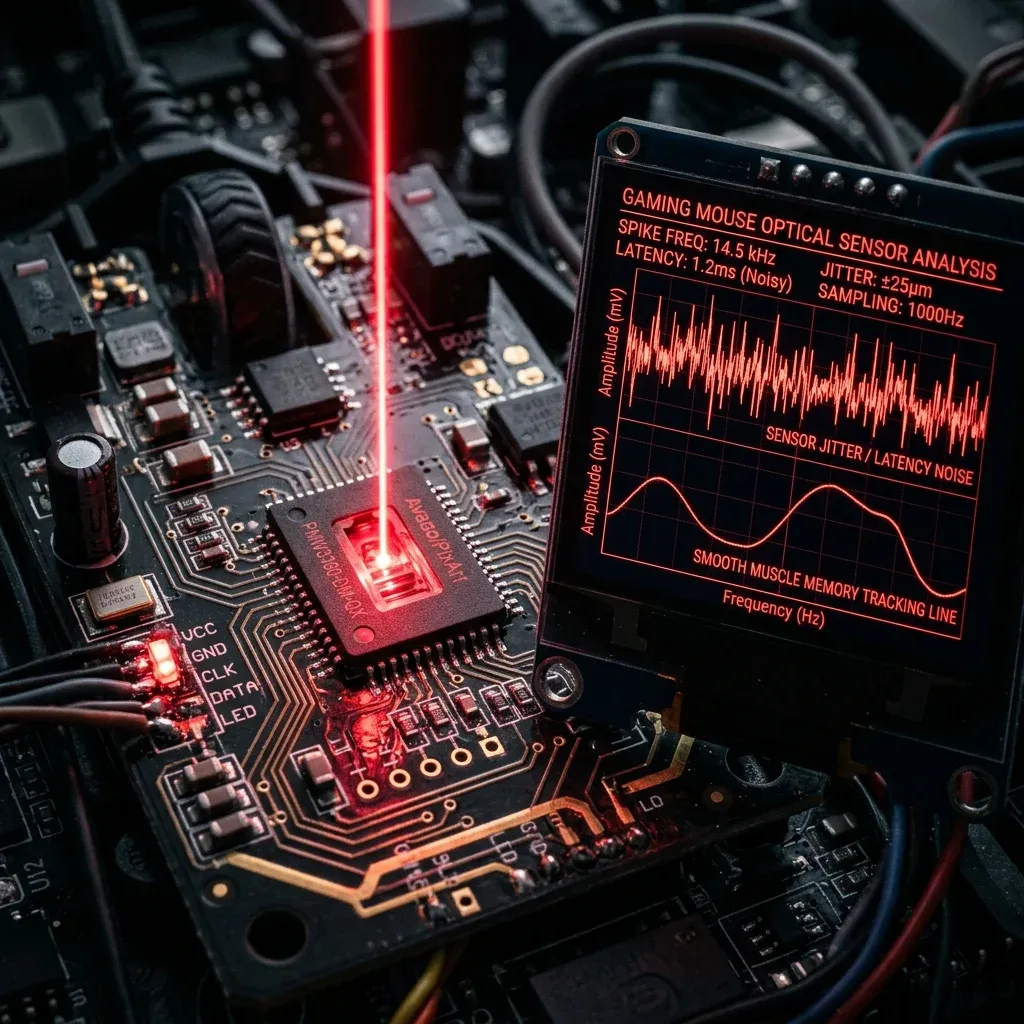
- Set Native Mouse DPI: Use 800 or 1600 DPI on modern optical sensors (PMW3395 / HERO 25K) to minimize sensor input latency by up to 2.5ms compared to 400 DPI while avoiding sensor smoothing.
- Calibrate Desk Space: Ensure your mousepad offers at least 450mm × 400mm of dynamic space. Your cm/360 should allow a full 180° turn from center to pad edge without lifting.
- Verify in Aim Trainers: Benchmark your target acquisition in KovaaK's or Aim Lab (Gridshot / Microflex) for 15 minutes to confirm zero overshoot or undershoot before entering ranked queues.
Frequently Asked Questions (FAQ)
Is higher DPI always better for aim?
Higher DPI (such as 1600 DPI) reduces input latency because the sensor sends motion packets more frequently per millimeter. However, going above 3200 DPI can introduce unwanted sensor noise or smoothing on certain optical sensors.
Should I match my hipfire sensitivity to my ADS sensitivity?
Yes! Utilizing 1:1 focal matching (0.847 in Valorant, 1.0 in CS2/Apex) aligns your focal muscle memory between hipfire aiming and scoped targeting.
Equipamentos de Elite Recomendados
Mouses ultra-leves topo de linha recomendados pelo Treinador Dalto para máxima precisão de sensor e consistência física no seu mousepad:
Logitech G Pro X Superlight 2
O mouse mais vencedor do cenário competitivo. Shape icônico, sensor HERO 2 e switches ópticos-mecânicos híbridos.
Razer Viper V3 Pro
Rastreador preciso com polling rate sem fio nativo de 8.000 Hz e formato simétrico ergonômico moderno.
Razer DeathAdder V3 Pro
Excelente para pegadas palm ou claw que querem apoio anatômico. Sensor Focus Pro 30K de última geração.
Lamzu Atlantis OG V2 / Thorn
Mouse boutique com peso irrisório e base vazada. Pegada traseira perfeita para controle agressivo de claw grip.
🎯 Lock In Perfect 1:1 Aim & Pro Consistency
Tired of daily aim inconsistency? Calibrate your physical cm/360, scope matching, and sensor latency. Get the complete Precision Aim System (4-Part Technical Manifestos) today for only $9.00 USD!
Unlock Elite Precision ($9) ⚡Dalto Outlier
Creator, DCPROSENSDalto built DCPROSENS to help competitive FPS players convert sensitivity, calibrate DPI, and keep their aim consistent across games.