Best FPS Games to Improve Your Aim

Why Your Game Choice Affects Aim Development
Different FPS games develop different aim subskills. Playing exclusively one game creates skill gaps that hurt you in other scenarios. Understanding which games train which skills lets you build a strategic practice portfolio — especially important for players who want to transfer skills between games or improve in a new title quickly.
FPS Games Ranked for Aim Development (2026)
S-Tier: CS2
Best for: Precision tap-firing, counter-strafing, crosshair placement, spray control
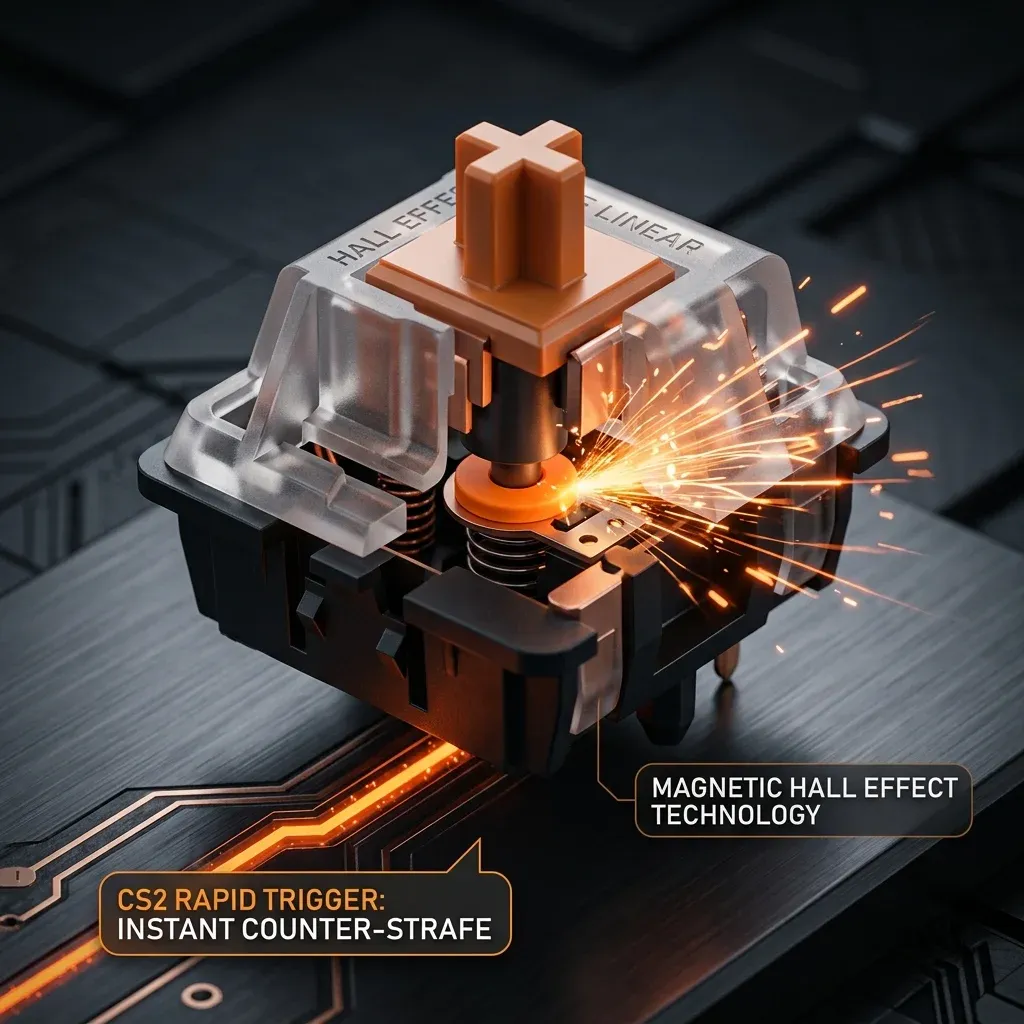
CS2 is the highest-precision FPS game commercially available. Its first-bullet accuracy system, deterministic spray patterns, and buy rounds create the best environment to develop deliberate, precision-first aim mechanics. If you can aim consistently in CS2 at FACEIT Level 5+, your crosshair placement will be elite in any other FPS game you play. Every serious FPS player should log 100+ hours in CS2 at some point.
Skill transfer score: ⭐⭐⭐⭐⭐
S-Tier: Valorant
Best for: Precision dueling, agent ability interaction, micro-adjustment under pressure, crosshair discipline
Valorant's low TTK (time-to-kill) punishes crosshair placement errors immediately and teaches players to pre-aim aggressively. The ability layer adds decision-making complexity that builds game sense alongside mechanics. Recommended entry point for players new to tactical FPS — more forgiving than CS2 while still demanding precision.
Skill transfer score: ⭐⭐⭐⭐⭐
A-Tier: Apex Legends
Best for: Tracking moving targets, flick shots on 3D movement, full-auto spray control at medium range
Apex's movement system (slides, bunny hops, mantle jumps) creates the most dynamic target tracking environment of any major FPS. If you want to improve 3D tracking and burst control, Apex is exceptional training. The downside: the medium TTK and armor system reduce the impact of first-bullet accuracy, so precision habits take longer to develop vs. CS2/Valorant.
Skill transfer score: ⭐⭐⭐⭐
A-Tier: Quake Champions / Diabotical
Best for: Rail (hitscan) flicks at maximum speed, leading projectile shots, pure mechanical aim ceiling
Arena shooters like Quake Champions have the highest mechanical ceiling of any aim-development tool. Hitscan weapons require frame-perfect flicks at 300% the movement speed of tactical FPS. Playing Quake even casually dramatically improves flick speed and improves performance in any tactical FPS. Used by many CS2 pros as warm-up.
Skill transfer score: ⭐⭐⭐⭐
B-Tier: Warzone
Best for: Long-range burst firing, ADS tracking at 50m+, managing weapon recoil with high scope magnification
Warzone's large map and long-range meta develops patience and long-range marksmanship. However, aim assist on PC (even for MnK players, the aim slowdown assist applies) and the low TTK-per-round volume make it less efficient for mechanical aim development than CS2 or Valorant.
Skill transfer score: ⭐⭐⭐
B-Tier: The Finals
Best for: Tracking targets through chaos, adapting crosshair to destructible environments, burst fire under visual noise
The Finals's uniquely chaotic environment (collapsing buildings, debris, smoke) trains concentration and focus amid visual noise. Unique training stimulus not replicable in CS2/Valorant.
Skill transfer score: ⭐⭐⭐
The Recommended Aim Development Stack
| Session Type | Recommended Tool | Duration |
|---|---|---|
| Daily warm-up | Aim Lab or KovaaK's routine | 15 min |
| Precision development | CS2 or Valorant deathmatch | 20 min |
| Main ranked game | Your primary FPS | 60–90 min |
| Weekly (optional) | Quake Champions session | 30 min |
Carrying Skills Between Games
When switching between games, use our DCPROSENS converter to transfer your exact cm/360 so muscle memory for physical movement distance is preserved. The game-unique mechanics (spray patterns, TTK, movement speed) require game-specific adaptation, but crosshair placement habits and flick accuracy transfer directly once the sensitivity is correctly calibrated.
Mathematical Mechanics & Engine Formulas
Understanding aim physics requires breaking down how rendering engines calculate rotation vectors. In 3D space, mouse movement inputs map to angular rotation per count based on the game engine's specific yaw constant:
• CS2 / Source Engine Yaw Constant: 0.022° per count
• Apex Legends Yaw Constant: 0.022° per count
• Overwatch 2 Yaw Constant: 0.0066° per count
• Fortnite Yaw Constant: 0.005555° per count
• Formula: eDPI = Hardware DPI × In-Game Sensitivity
• Formula: cm/360 = (360 × 2.54) / (DPI × Sensitivity × Yaw)
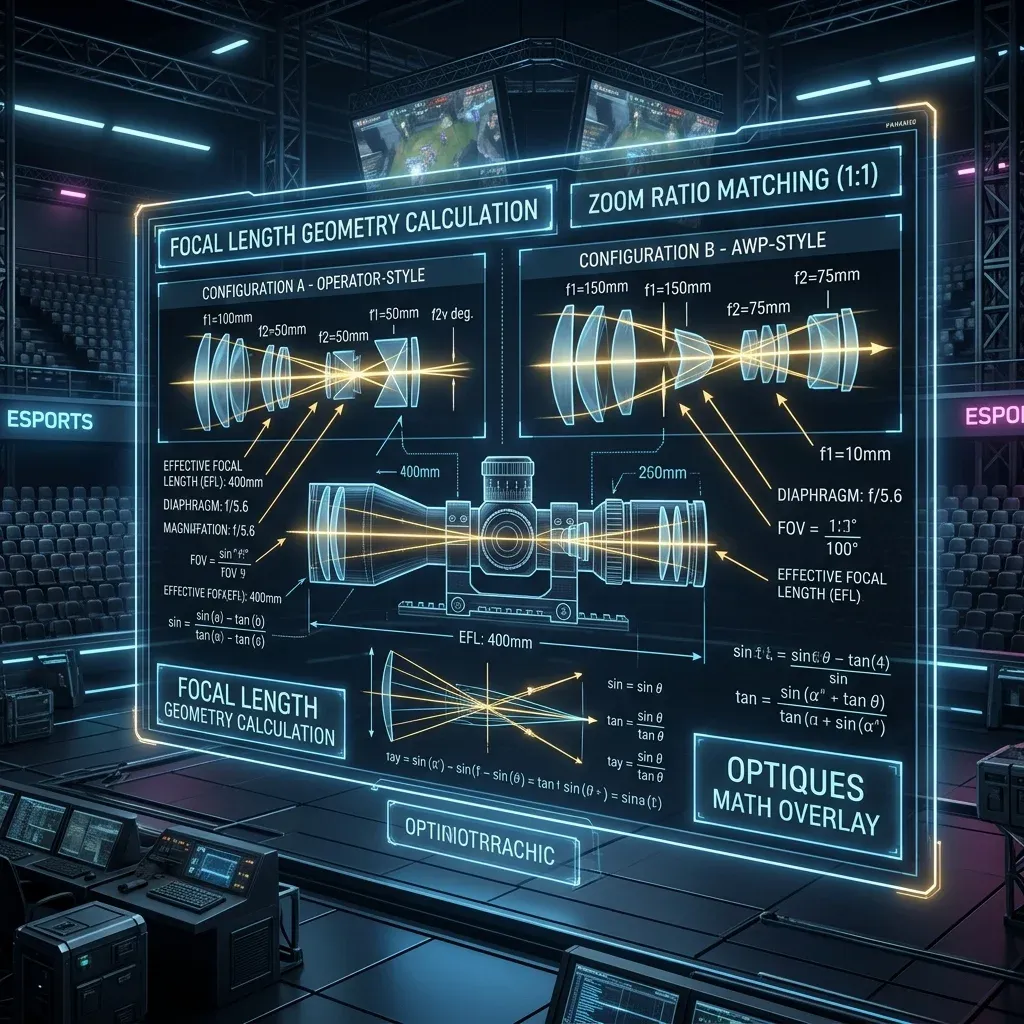
By keeping your physical centimeters per 360 rotation (cm/360) consistent, you maintain identical physical hand travel across titles. However, when switching between different aspect ratios (16:9 vs 4:3 stretched) or vertical FOVs, you must apply 0% Monitor Distance Matching (Focal Length Scaling) to match optical tracking speed at screen center.
Esports Meta & Pro Player Benchmark Data
Looking at publicly available pro settings and general esports sensitivity trends:
- Tactical Shooters (Valorant / CS2): The median pro eDPI sits between 200 and 320 eDPI (approx. 40cm/360 to 65cm/360). Pro players prefer lower sensitivity to maximize micro-correction accuracy and first-bullet headshot precision.
- Tracking & Dynamic Shooters (Apex / OW2 / Fortnite): The median pro eDPI ranges from 2400 to 4800 eDPI in Source/OW2 terms (approx. 28cm/360 to 38cm/360). Higher sensitivity allows rapid 180° sweeps and smooth target tracking during erratic movement.
Step-by-Step Calibration & Actionable Implementation
- Disable Windows Mouse Acceleration: Open Windows Control Panel → Mouse Properties → Pointer Options → Uncheck "Enhance Pointer Precision". This ensures 1:1 raw input without non-linear velocity scaling.
- Set Native Mouse DPI: Use 800 or 1600 DPI on modern optical sensors (PMW3395 / HERO 25K) to minimize sensor input latency by up to 2.5ms compared to 400 DPI while avoiding sensor smoothing.
- Calibrate Desk Space: Ensure your mousepad offers at least 450mm × 400mm of dynamic space. Your cm/360 should allow a full 180° turn from center to pad edge without lifting.
- Verify in Aim Trainers: Benchmark your target acquisition in KovaaK's or Aim Lab (Gridshot / Microflex) for 15 minutes to confirm zero overshoot or undershoot before entering ranked queues.
Frequently Asked Questions (FAQ)
Is higher DPI always better for aim?
Higher DPI (such as 1600 DPI) reduces input latency because the sensor sends motion packets more frequently per millimeter. However, going above 3200 DPI can introduce unwanted sensor noise or smoothing on certain optical sensors.
Should I match my hipfire sensitivity to my ADS sensitivity?
Yes! Utilizing 1:1 focal matching (0.847 in Valorant, 1.0 in CS2/Apex) aligns your focal muscle memory between hipfire aiming and scoped targeting.
Frequently Asked Questions
Which game builds aim fastest?
An arena shooter with fast respawns gives you the most aiming repetitions per hour, which is what mechanical skill is built from. CS2 deathmatch and Quake-lineage arena games both work. Tactical rounds with long downtime build decision-making, which matters just as much but trains a different thing.
Should I play multiple shooters at once?
It works if you convert your sensitivity properly so cm/360 stays constant across all of them, and it fragments your progress badly if you do not. The physical motion is transferable; the game knowledge is not. Convert once, then treat the games as one aiming practice split across several environments.
Is deathmatch better than an aim trainer?
They train different halves. A trainer isolates the mechanic with no distraction, which builds the movement faster. Deathmatch adds timing, unpredictability and pressure, which is what makes the mechanic survive contact with a real match. Most improvement comes from doing both.
Dalto Outlier
Creator, DCPROSENSDalto built DCPROSENS to help competitive FPS players convert sensitivity, calibrate DPI, and keep their aim consistent across games.
Related Guides & Articles
Disclosure: some links on this page are affiliate links. As an Amazon Associate, DCPROSENS earns from qualifying purchases at no extra cost to you.