Build the Perfect CS2/Valorant Crosshair
TL;DR
A crosshair generator lets you adjust every visual parameter of your crosshair (size, thickness, gap, color, outline) with live preview, then exports a shareable code or console commands. Start from a pro's crosshair as a baseline, then adjust size and color for your own monitor and eyesight rather than using it unchanged.
Why Your Crosshair Setting Actually Matters
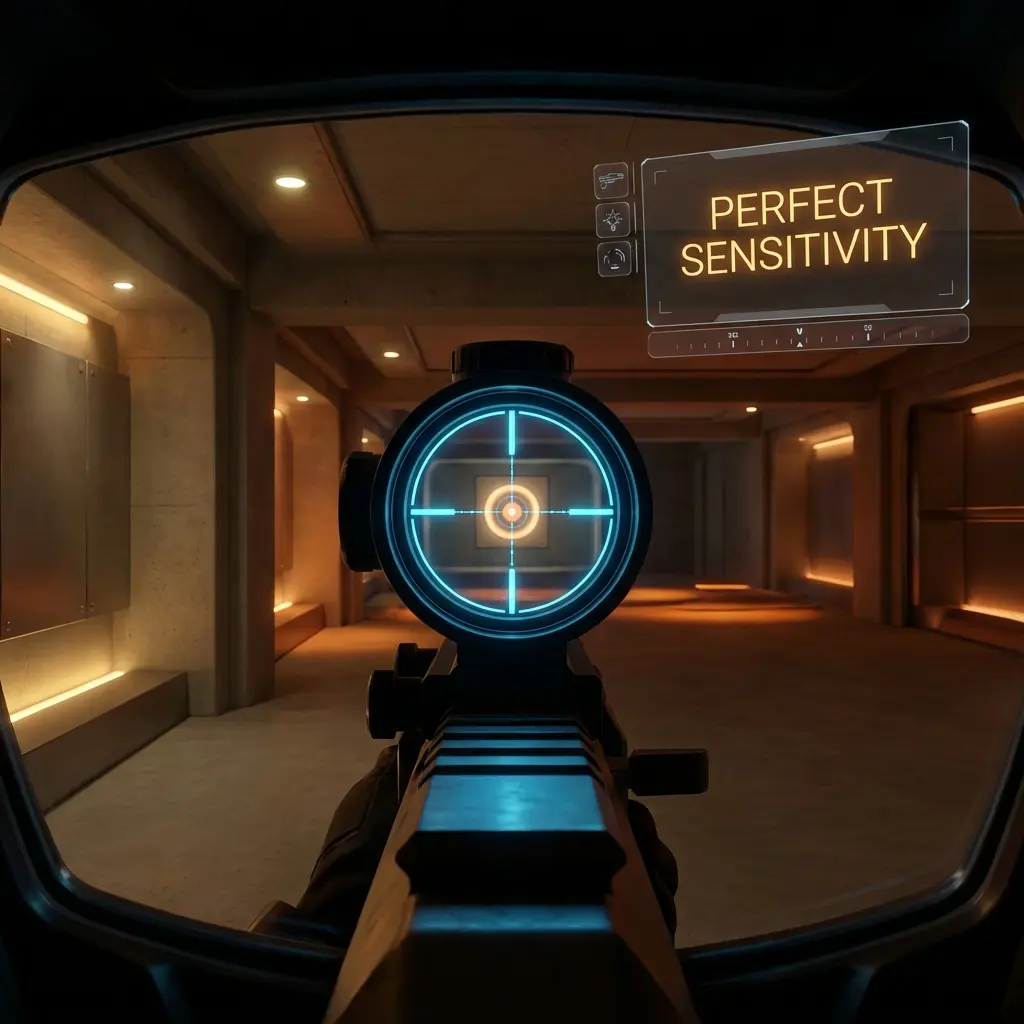
A crosshair isn't just cosmetic — its size, color, and shape directly affect how precisely you can place it on a target and how easily you can track that placement against different backgrounds. A crosshair generator (like DCPROSENS's own crosshair generator) exists so you can adjust every parameter with a live preview instead of guessing at raw numbers and re-checking in-game after every change.
The Core Parameters You're Actually Adjusting
Size and Thickness
Smaller, thinner crosshairs give more precise visual feedback on exactly where your shot will land, which matters most for headshot-focused rifles. Larger, thicker crosshairs are easier to track visually during fast movement or against busy backgrounds, at some cost to pixel-level precision.
Gap
The gap is the empty space between the center of your screen and where each crosshair line begins. A larger gap keeps your view of the target's head clearer (nothing overlapping it at rest), while a gap near zero puts the crosshair lines closer to dead center for players who prefer a tighter visual reference.
Color
Color is a genuine performance factor, not just preference — it needs to contrast against the maps and character models you'll actually be aiming at. Bright green and cyan are popular specifically because they rarely occur naturally in most maps' color palettes, making the crosshair easy to track against nearly any background.
Outline
A thin black outline around each crosshair line keeps it visible against light backgrounds (snow maps, bright skyboxes) where a pure bright color alone can wash out and become hard to see.
Step-by-Step: Building Your Own
- Start from a baseline. Pick a pro player's published crosshair code as a starting point rather than building from scratch — our pro settings database lists real, current crosshair codes.
- Adjust size for your monitor and resolution. A crosshair sized for 1080p will look proportionally larger on a 1440p or 4K display at the same raw settings — nudge size down slightly on higher resolutions.
- Test against multiple maps, not just the menu preview. A crosshair that looks great against the practice range's plain background can disappear entirely against a bright, detailed map texture.
- Save and export the code once it feels right, so you can quickly restore it after a settings reset or on a new PC.
Why Copying a Pro's Crosshair Code Exactly Often Feels Wrong
This is the most common mistake players make with crosshair generators: importing a pro's exact code and expecting it to feel identical. Two things usually differ — resolution and monitor size. A crosshair tuned for someone playing at 1024×768 stretched on a 24" monitor will look and feel meaningfully different at native 1440p on a 27" monitor, even with the identical code. Use a pro's code as a reference for proportions (their size-to-thickness-to-gap ratio) rather than assuming the raw numbers will transfer perfectly to your setup.
Static vs. Dynamic Crosshairs
Most competitive players lock their crosshair to a fixed size regardless of movement or firing state (a "static" crosshair), because a crosshair that visibly expands when moving or shooting makes it harder to build consistent aim habits — you're tracking a moving target on top of aiming at one. CS2 and Valorant both default toward more dynamic crosshairs out of the box; switching to fully static is one of the highest-impact settings changes a newer competitive player can make.
Quick Reference: What to Adjust For What Problem
| Problem | Adjust |
|---|---|
| Crosshair disappears on bright maps | Add/increase outline thickness |
| Hard to track during fast flicks | Increase size slightly |
| Crosshair covers the target's head | Increase gap, decrease size |
| Feels inconsistent during movement | Switch to fully static crosshair |
Accessibility: Colorblind-Friendly Crosshair Choices
Both CS2 and Valorant ship built-in colorblind modes that adjust enemy outlines and UI elements, but your crosshair color is a separate setting worth thinking about independently. Red-green colorblindness (the most common form) makes standard red crosshairs particularly hard to distinguish from certain map textures and blood effects. Cyan, bright yellow, and magenta tend to remain clearly visible across the most common forms of color vision deficiency, which is part of why cyan in particular has become a de facto competitive standard rather than being purely an aesthetic trend. If you're unsure which colors work best for your own vision, testing a few directly in the firing range against a variety of backgrounds is more reliable than any general recommendation, including this one.
Crosshair Settings Per Weapon Type
Some players maintain slightly different crosshair configurations for different weapon categories rather than one universal setting. A larger, slightly thicker crosshair for shotguns and SMGs (where precision matters less than fast target acquisition at close range) paired with a smaller, tighter crosshair for rifles (where precise headshot placement at range is the priority) is a common split. This is more setup effort than most players want to maintain, but a generator that lets you save and quickly switch between multiple named presets makes it realistic to try without needing to rebuild each one from scratch every time.
Testing Your Crosshair Properly Before Committing
The in-game settings menu preview rarely reflects real conditions — it's usually shown against a plain, static background with perfect lighting. Before locking in a new crosshair, spend at least one full match testing it across a variety of real scenarios: smoke-obscured angles, bright outdoor lighting, dark interior rooms, and normal mid-range engagements. A crosshair that looks perfect in the menu can become nearly invisible in specific in-game lighting conditions you'd never catch without testing in the actual maps you play.
Saving, Sharing, and Restoring Crosshair Codes
Once you've settled on a crosshair you like, export or copy its code before anything else. Both CS2 and Valorant support importing a crosshair from a shared code, which means you can restore your exact setup instantly after a fresh install, a settings reset following a driver or OS update, or when setting up a second PC. Keep the code saved somewhere outside the game itself — a notes app, a text file, or a bookmarked crosshair generator page that stores your saved presets — since in-game settings can occasionally reset without warning after a major patch.
When It's Worth Rebuilding From Scratch vs. Tweaking
If your current crosshair mostly works but one specific thing bothers you (visibility on one map, size feeling slightly off after a monitor upgrade), a small targeted adjustment is almost always better than starting over completely. Full rebuilds are worth doing when you've changed something fundamental — a new resolution, a significant grip or sensitivity change, or genuinely disliking your current setup rather than one minor annoyance with it.
A Final Practical Tip
Whatever crosshair you settle on, give it at least a full week of regular play before deciding it's wrong. A new crosshair — even a well-designed one — briefly disrupts the visual habits built around your previous setup, and that adjustment period is easy to mistake for the crosshair itself being a poor choice. If it still feels off after a genuine week of normal play, that's a much more reliable signal than judging it after a single session, and at that point it's worth revisiting size and color rather than assuming the whole approach was wrong.
Frequently Asked Questions
What is the best crosshair color for CS2 and Valorant?
Bright green or cyan are the most common choices because they contrast well against nearly every map's natural color palette. The genuinely best color is whichever one you can consistently see against the maps you play most, which is worth testing rather than assuming.
Why doesn't a pro's crosshair code feel the same as theirs?
Crosshair size and proportions read differently depending on your resolution and monitor size. A code copied exactly will look and feel different if your setup doesn't match the pro's — use it as a proportional starting point, not a guaranteed exact match.
Should I use a dynamic or static crosshair?
Most competitive players use a fully static crosshair — one that stays the same size regardless of movement or firing — since it removes an extra variable from aim training and makes shot placement more predictable.
Does crosshair size affect my actual accuracy, or just visibility?
Only visibility and precision feedback — crosshair size is purely cosmetic and has no effect on where your bullets actually land. It affects how easily and precisely you can see where you're aiming, which indirectly affects your accuracy through better visual feedback.
🎯 Lock In Perfect 1:1 Aim & Pro Consistency
Tired of daily aim inconsistency? Calibrate your physical cm/360, scope matching, and sensor latency. Get the complete Precision Aim System (4-Part Technical Manifestos) today for only $9.00 USD!
Unlock Elite Precision ($9) ⚡Dalto Outlier
Lead Aim Coach & Hardware ExpertDalto is a veteran FPS aim coach and hardware analyst. Having trained hundreds of competitive players in Valorant and CS2, he specializes in mouse sensor technology, perfect sensitivity calibrations, and cognitive muscle memory optimization.