Free Online Aim Trainer: Browser Aim Training (No Download)
TL;DR
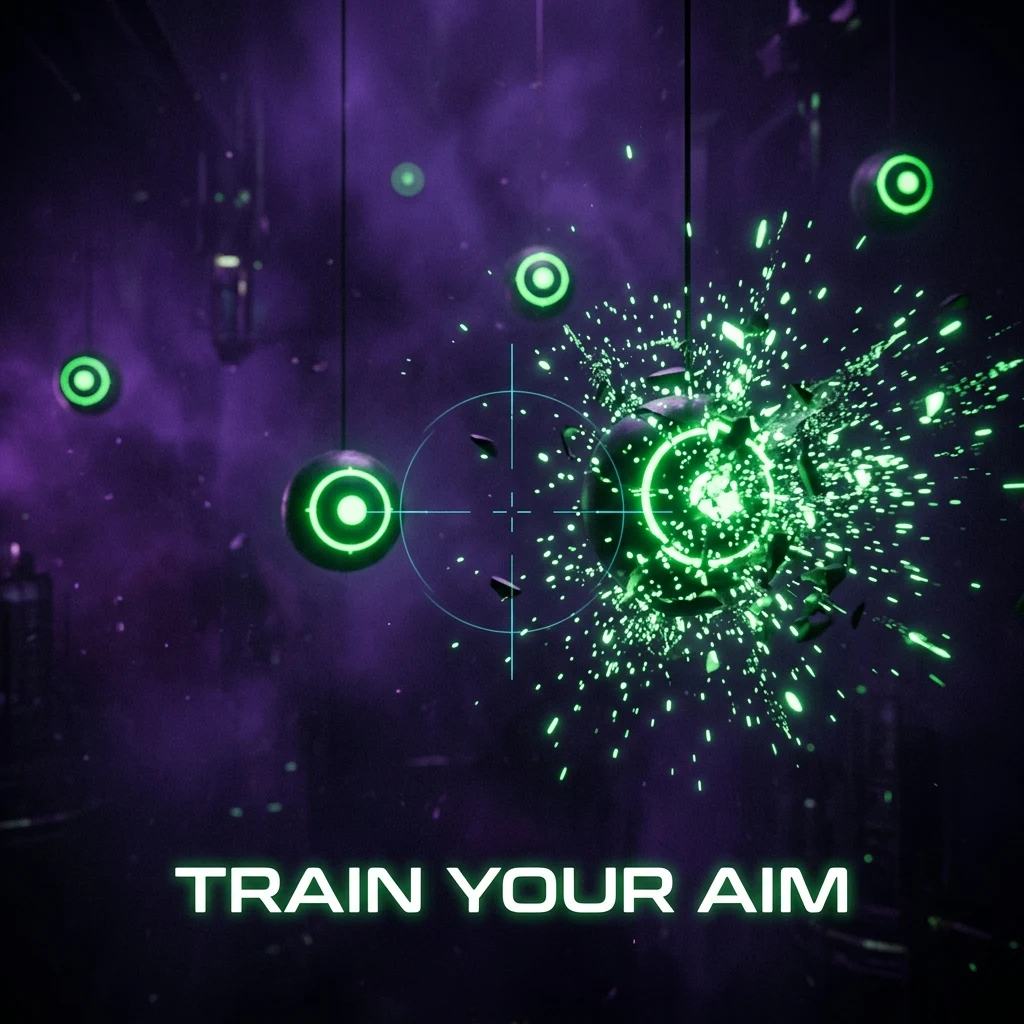
A free online aim trainer runs entirely in your browser and trains the mechanical parts of aim — reaction time, target tracking, and click precision — without installing anything. It won't teach game sense or positioning, and the gains only transfer to your actual games if your trainer sensitivity matches your in-game sensitivity. DCPROSENS's own Aim Trainer covers this with three modes (Gridshot, Tracking, Reflex) for free, unlimited, right now.
What an Aim Trainer Actually Improves
An aim trainer isolates the mechanical half of shooting — moving your crosshair onto a target and firing at the right moment — and drills it repeatedly outside the noise of a real match. Research on trained esports players using KovaaK's found excellent measurement reliability (ICC estimates between 0.947 and 0.995 across outcome variables), confirming that aim-trainer scores track real, consistent changes in shooting proficiency rather than random noise. That reliability is exactly why aim trainers are useful as a warm-up and a diagnostic: the number you see actually reflects your current mechanical state.
What it doesn't do is teach you the other half of playing well. Aim trainers improve baseline mouse control, reaction time to visual stimuli, and tracking consistency, but they don't improve game sense, positional awareness, strategic decision-making, or teamwork — those only come from playing the actual game, reviewing your own rounds, and learning specific maps and matchups. Treat an aim trainer as a tool for the mechanical 30% of the game, not a replacement for the other 70%.
The concept of transfer matters more than the score itself. Near transfer happens when the training task and the in-game task share similar perceptual and motor demands — practicing flicks onto static spheres and then flicking onto an enemy head is a near-transfer pair, so the skill genuinely carries over. The single biggest reason players grind an aim trainer for hours and see their trainer scores climb without any change in actual match performance is a sensitivity mismatch between the trainer and their real game — if the physical mouse movement required to hit a target doesn't match what you use in-game, you're training a different motor skill, not the one you'll actually use in a match.
Browser-Based vs. Downloaded (KovaaK's, Aim Lab) — Tradeoffs
Downloaded, standalone aim trainers — KovaaK's Aim Trainer and Statespace's Aim Lab (aimlabs.com) are the two best known — offer the deepest customization: thousands of community-made scenarios, detailed per-shot statistics, and support for practically any sensitivity or resolution combination. The tradeoff is friction: an install, a multi-gigabyte download, and in some cases a separate purchase, before you can take a single shot.
A browser-based aim trainer trades some of that depth for zero setup. There's nothing to install, no account wall to hit before your first rep, and it runs on any machine with a modern browser — useful for a quick warm-up on a laptop, a shared PC, or before jumping into a queue when you don't want to wait on a launcher. For the specific fundamentals most players are actually missing — flick accuracy, sustained tracking, and reaction speed — a focused browser trainer covers the same near-transfer mechanics a downloaded one does, just with a smaller scenario library.
Neither format is objectively "better" — it depends on what you need. If you want deep, scenario-specific practice tuned to one exact weakness, a downloaded trainer's larger library has the edge. If you want a fast, no-friction warm-up you'll actually do consistently before every session, removing install friction tends to win in practice, since the best aim-training routine is the one you actually stick to.
Try DCPROSENS's Free Aim Trainer
The DCPROSENS Aim Trainer is free, runs entirely in the browser, and covers three core modes that map directly onto the fundamentals above: Gridshot for flick accuracy against multiple targets, Tracking for sustained crosshair-on-target control, and Reflex for raw reaction time to a stimulus. It supports custom sensitivity matching so you can mirror your actual in-game DPI and sensitivity — the single adjustment that determines whether your reps here transfer to your real games at all. Confirm your numbers first with the sensitivity converter so the trainer isn't quietly teaching you a different physical motion than the one you use in Valorant, CS2, or whatever you queue into afterward.
If you already know which specific mechanic is holding you back — say, small-angle correction under pressure rather than general flicking — DCPROSENS also has a paid tier built for that kind of targeted isolation: Aim Lab, with four dedicated modes (Micro-Flick, Dynamic Click Timing, Strafe Peek, Ghost vs Pro) including practice against a real pro player's exact recorded sensitivity. Our companion post, Aim Trainer vs Aim Lab: Which Should You Play First?, breaks down exactly which one to start with and when the free trainer stops being enough on its own.
How Long to Warm Up Before Ranked
Research on skill acquisition consistently points to short, focused sessions over long ones — roughly 20 to 30 minutes of deliberate practice outperforms multi-hour marathon sessions, since attention and precision both degrade well before the three-hour mark, and fatigued reps can reinforce sloppy habits instead of correcting them. For a pre-ranked warm-up specifically, you don't need the full 20–30 minute block: 5 to 10 minutes split across your weakest one or two mechanics (say, Gridshot then Tracking) is enough to activate the same muscle memory you'll use in the match, without burning focus you need for the actual game.
Skip the warm-up entirely and you're playing your first few rounds at reduced mechanical sharpness while your reaction time and tracking catch up cold — a measurable, well-documented pattern in competitive shooters generally. Warm up for too long on unrelated scenarios, on the other hand, and you risk carrying fatigue or a mismatched sensitivity feel into the match. The practical middle ground: a short, targeted session at your matched in-game sensitivity, focused on the 1–2 mechanics you know you rely on most in your main game.
What to Do If Trainer Gains Aren't Showing Up In-Game
If your Gridshot or Tracking scores are climbing steadily but your actual match performance feels unchanged, check three things in order. First, confirm your trainer sensitivity actually matches your in-game cm/360 — this is the single most common cause, and it's worth re-verifying with the sensitivity converter even if you're sure you set it correctly, since a DPI change on either end silently breaks the match. Second, make sure you're drilling the specific mechanic your games actually demand — a player who struggles with recoil-controlled spray tracking won't see much transfer from pure flick-accuracy drills, since the motor pattern is different. Third, remember that aim trainers don't touch decision-making — if your mechanical numbers are genuinely improving but rounds still feel the same, the gap may be positioning, crosshair placement, or game sense rather than raw aim, in which case reviewing your own gameplay footage will do more than another hour in the trainer.
None of this replaces actually playing the game. An aim trainer sharpens the tool; only match reps teach you when and where to use it.
What Each DCPROSENS Aim Trainer Mode Actually Drills
Gridshot spawns a grid of targets one at a time and scores how quickly and accurately you flick from one to the next — it's a direct proxy for the "see enemy, snap crosshair onto head, click" sequence that decides most close-to-mid-range duels in a tactical shooter. Tracking replaces discrete targets with a continuously moving one, scoring how long you can keep your crosshair glued to it — the same underlying skill as holding an angle on a strafing enemy while spraying, or following a peeking target through a doorway. Reflex strips away the aiming component entirely and isolates raw reaction time to a visual stimulus, which matters for anything decided by who reacts first — a wide peek, a corner pop, a first-contact duel where positioning was already even.
Running all three in sequence before a session, rather than picking one favorite, covers the three distinct motor and cognitive demands separately instead of letting one strong skill mask a weak one. A player who's excellent at Gridshot but weak at Tracking will often look fine in highlight-reel duels but consistently lose extended spray fights — a gap that's invisible until you isolate the two skills individually.
Common Aim Trainer Myths
"More hours always means more improvement." Past the 20–30 minute focused window covered above, additional reps on fatigued attention tend to reinforce whatever bad habit is already creeping in rather than building a new good one. A shorter, sharper session consistently beats a longer, tired one for actual skill retention.
"Training at a higher sensitivity than you play makes your reflexes faster." This misunderstands what's actually being trained. Sensitivity changes how far your view rotates per physical movement, not your visual reaction time or your hand's raw movement speed — training at a mismatched sensitivity just means the muscle memory you're building doesn't match the physical motion you'll actually use in your real game, which is the opposite of useful.
"A high trainer score guarantees you'll rank up." Aim mechanics are one input into winning a match, not the only one. Positioning, utility usage, communication, and decision-making all sit outside what any aim trainer measures, which is exactly why the research on transfer draws a hard line between "improves mechanical proficiency" and "improves overall match performance" — the two overlap, but they're not the same thing.
Why "No Download" Is a Genuine Advantage, Not Just Convenience
Beyond the obvious time saved skipping an install, a browser-based trainer runs on hardware that a full downloaded client sometimes can't — a work laptop, a Chromebook, a shared family PC, or a machine you're only using temporarily. That accessibility matters for warm-up specifically: the value of a pre-game warm-up comes from doing it consistently right before you queue, and a tool with zero setup friction is one you're far more likely to actually open every single session instead of skipping it "just this once" because the launcher needs an update first.
Frequently Asked Questions
Frequently Asked Questions
Do aim trainers actually improve in-game aim?
Yes, for the mechanical parts of aim — reaction time, tracking, and flick accuracy — provided your trainer sensitivity matches your in-game sensitivity exactly. What they don't improve is game sense, positioning, or decision-making, which only come from playing and reviewing actual matches.
How many minutes a day should I aim train?
Research on skill acquisition favors short, focused sessions of roughly 20-30 minutes over long marathon sessions, since precision and attention both degrade well before the multi-hour mark. Before a ranked session specifically, 5-10 minutes on your weakest one or two mechanics is enough to warm up without burning focus.
🎯 Lock In Perfect 1:1 Aim & Pro Consistency
Tired of daily aim inconsistency? Calibrate your physical cm/360, scope matching, and sensor latency. Get the complete Precision Aim System (4-Part Technical Manifestos) today for only $9.00 USD!
Unlock Elite Precision ($9) ⚡Dalto Outlier
Creator, DCPROSENSDalto built DCPROSENS to help competitive FPS players convert sensitivity, calibrate DPI, and keep their aim consistent across games.