Mousepad Speed Chart: Pick the Right Pad
TL;DR
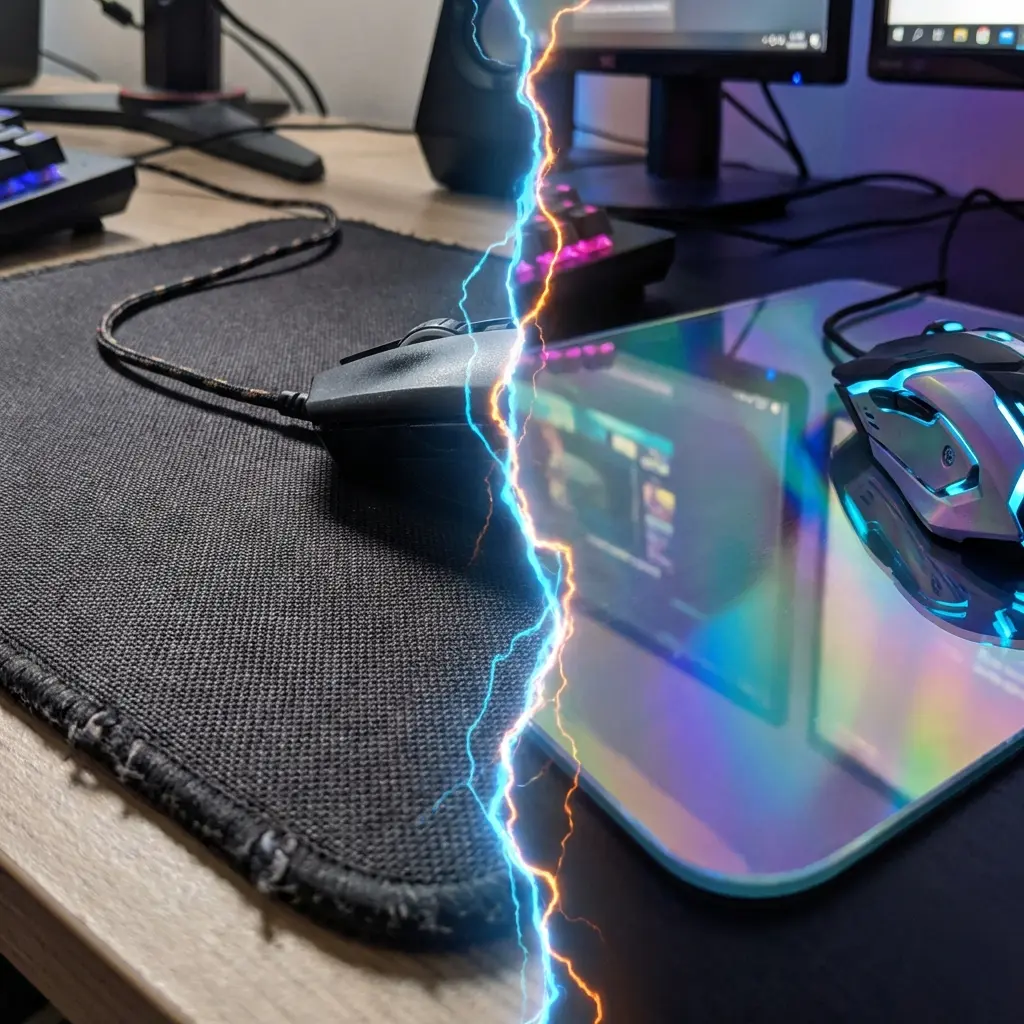
Mousepads sit on a spectrum from "speed" (low friction, glide easily, favor fast flicks) to "control" (higher friction, resist unwanted drift, favor precise tracking). Your ideal spot on that spectrum depends more on your grip style and sensitivity than on brand — our mousepad friction chart compares real pads directly.
What "Speed" and "Control" Actually Mean for a Mousepad
Every cloth or hybrid mousepad sits somewhere on a spectrum defined by surface friction. A speed pad has a smoother, lower-friction weave that lets your mouse glide with very little resistance, favoring fast flicks and quick target-to-target movement. A control pad has a rougher, higher-friction weave that resists unwanted drift and micro-slippage, favoring precise, stable tracking at the cost of raw glide speed. Our mousepad friction & speed chart plots real pads on this exact axis using measured data rather than marketing labels.
Why This Matters More Than Most Players Realize
Surface friction interacts directly with your sensitivity and grip style, not just your general comfort. A very low-friction speed pad under a low-sensitivity (high cm/360) setup can make it genuinely difficult to stop precisely on a target, since the mouse keeps gliding slightly past where you intended to stop. The same pad under a high-sensitivity, fingertip-grip setup can feel excellent, since small, fast movements are exactly what a speed pad is built to support.
Matching Pad Type to Sensitivity Range
- Low sensitivity (40cm+/360, large arm sweeps): A control-leaning or hybrid pad generally helps here, since the extra friction adds stability to large, sweeping arm movements and reduces overshoot on long flicks.
- Medium sensitivity (25–40cm/360): A hybrid or balanced pad works for most players in this range, since neither large sweeps nor tiny micro-adjustments dominate.
- High sensitivity (under 25cm/360, small wrist/finger movements): A speed-leaning pad tends to feel better here, since fine, fast finger-driven movements benefit from minimal resistance.
Matching Pad Type to Grip Style
Grip style interacts with pad choice independently of sensitivity. Fingertip grip, which relies on fast, light finger movement rather than full-arm stability, generally pairs well with a smoother, faster surface — the reduced hand contact already sacrifices some stability, and a very high-friction pad can feel like it's fighting the grip's natural fast movement. Palm grip, which already provides more natural stability through full hand and forearm contact, has more room to benefit from a higher-friction control surface without feeling sluggish.
Glass and Hard Pads: A Different Category Entirely
Glass and hard plastic pads sit outside the cloth speed/control spectrum entirely — they offer extremely low, highly consistent friction with zero surface texture wear over time, unlike cloth pads which can develop uneven wear patterns after months of use in the same motion zones. The trade-off is a harder, louder feel under the mouse feet, and effectively zero cushioning. Players who prioritize raw consistency above all else (competitive players who recalibrate frequently and don't want pad wear introducing subtle drift over months) often prefer glass for this reason, independent of where they'd otherwise sit on the cloth speed/control spectrum.
Mousepad Size and cm/360
Pad size needs to physically accommodate your cm/360, not just your preferred surface feel. A player running a 40cm/360 needs enough clear pad space to execute a full 180° turn (roughly half that distance, 20cm) without lifting and repositioning the mouse mid-turn. Our mousepad size calculator and desk space calculator both check this directly against your actual settings — a pad that's the "right" friction but too small will still force awkward mouse lifts during fast turns.
How to Actually Decide
- Identify your current cm/360 and rough grip style (fingertip, claw, or palm).
- Use the ranges above as a starting point, not a strict rule — personal preference still matters more than any general guideline.
- Confirm the pad is large enough for your cm/360 using a size calculator before buying, especially for low-sensitivity setups.
- Expect a short adjustment period after switching pad surfaces, similar to a grip or sensitivity change — friction differences are subtle but real, and your hand needs a short window to recalibrate.
How Friction Changes Over the Life of a Cloth Pad
Cloth mousepads don't stay at their factory friction level forever. The specific area you run your mouse through most — usually a band across the center-to-lower portion of the pad — gradually smooths out and loses texture faster than the rest of the surface, sometimes creating a subtly inconsistent feel between your "worn" zone and the pad's edges months into regular use. Rotating a cloth pad 180 degrees periodically, or occasionally shifting your mouse's resting position slightly, can spread this wear more evenly and extend the period before the pad feels noticeably different from when you bought it.
Cleaning and Maintenance
Skin oils, dust, and general grime build up on a cloth pad's surface over weeks of use and gradually increase friction in ways that can feel like the pad itself changed, even when the fabric hasn't actually worn down. Most cloth pads can be hand-washed with mild soap and cool water (check the manufacturer's specific care instructions first — some hybrid and speed-focused weaves are more sensitive to washing than standard control pads) and air-dried fully before use. A pad that's started to feel unexpectedly "grabby" or inconsistent is often due for a wash before you assume it's simply worn out and needs replacing.
Wrist Rest and Pad Thickness Considerations
Thickness is a separate axis from friction, but worth deciding alongside it. Thinner pads (2–3mm) sit closer to desk height, which some players find more comfortable when also using a wrist rest, since it reduces the height difference between the pad surface and the rest. Thicker pads (4–6mm) provide more cushioning directly under the mouse itself but can create a more noticeable step up from a wrist rest positioned at standard desk height — worth testing together if you use both, rather than choosing each independently.
Two-Pad Setups: When It's Worth Owning More Than One
Some players keep two different pads and switch based on what they're doing — a faster, low-friction pad for casual play or aim-trainer warmup sessions, and a higher-friction control pad for actual competitive matches where consistency matters most. This isn't necessary for most players, but it's a reasonable option if you've genuinely tested both ends of the friction spectrum and found real, situational value in each rather than a single clear preference. Just be aware that switching pads mid-week introduces its own small adjustment period each time, which some players find outweighs the benefit.
Budget vs. Premium Pads: What Actually Changes
Price differences between mousepads mostly reflect weave consistency, stitched edges (preventing fraying over time), and base material quality (a non-slip rubber base that doesn't shift on the desk) rather than a fundamentally different friction category. A budget pad and a premium pad can sit at similar points on the speed/control spectrum — the premium option typically wins on long-term durability and edge fraying resistance rather than offering a meaningfully different day-one feel worth paying a large premium for on its own.
The Bottom Line
There's no single "best" mousepad independent of your own sensitivity, grip, and preference — only a best fit for your specific setup. Use the friction spectrum and sizing guidance above to narrow down a reasonable starting point, then trust a genuine multi-session trial over marketing copy or a single pro player's public endorsement, since their hand, grip, and settings are very unlikely to match yours exactly. Small, deliberate testing beats guessing from a spec sheet every time.
Frequently Asked Questions
What is the difference between a speed and control mousepad?
Speed pads have lower surface friction and let the mouse glide with minimal resistance, favoring fast flicks. Control pads have higher friction that resists drift, favoring precise, stable tracking. Most pads sit somewhere on a spectrum between the two rather than being purely one or the other.
Do I need a control pad if I play at low sensitivity?
Not strictly required, but it often helps. Low sensitivity means larger physical arm movements, and the added friction of a control-leaning pad can reduce overshoot and add stability to those bigger sweeps.
Is a glass mousepad faster than a cloth speed pad?
Typically yes, glass pads offer very low, highly consistent friction — often faster-feeling than even speed-oriented cloth pads — with the trade-off of a harder surface feel and no cushioning.
How do I know if my mousepad is too small for my sensitivity?
If you regularly have to lift and reposition your mouse mid-turn during a fast 180°, your pad is likely too small for your current cm/360. A mousepad size calculator can confirm the minimum dimensions your specific settings need.
Equipamentos de Elite Recomendados
Mouses ultra-leves topo de linha recomendados pelo Treinador Dalto para máxima precisão de sensor e consistência física no seu mousepad:
Logitech G Pro X Superlight 2
O mouse mais vencedor do cenário competitivo. Shape icônico, sensor HERO 2 e switches ópticos-mecânicos híbridos.
Razer Viper V3 Pro
Rastreador preciso com polling rate sem fio nativo de 8.000 Hz e formato simétrico ergonômico moderno.
Razer DeathAdder V3 Pro
Excelente para pegadas palm ou claw que querem apoio anatômico. Sensor Focus Pro 30K de última geração.
Lamzu Atlantis OG V2 / Thorn
Mouse boutique com peso irrisório e base vazada. Pegada traseira perfeita para controle agressivo de claw grip.
🎯 Lock In Perfect 1:1 Aim & Pro Consistency
Tired of daily aim inconsistency? Calibrate your physical cm/360, scope matching, and sensor latency. Get the complete Precision Aim System (4-Part Technical Manifestos) today for only $9.00 USD!
Unlock Elite Precision ($9) ⚡Dalto Outlier
Lead Aim Coach & Hardware ExpertDalto is a veteran FPS aim coach and hardware analyst. Having trained hundreds of competitive players in Valorant and CS2, he specializes in mouse sensor technology, perfect sensitivity calibrations, and cognitive muscle memory optimization.