Symmetrical vs Ergonomic: Which Mouse Shape Wins?
Two Real Mice, Two Different Philosophies
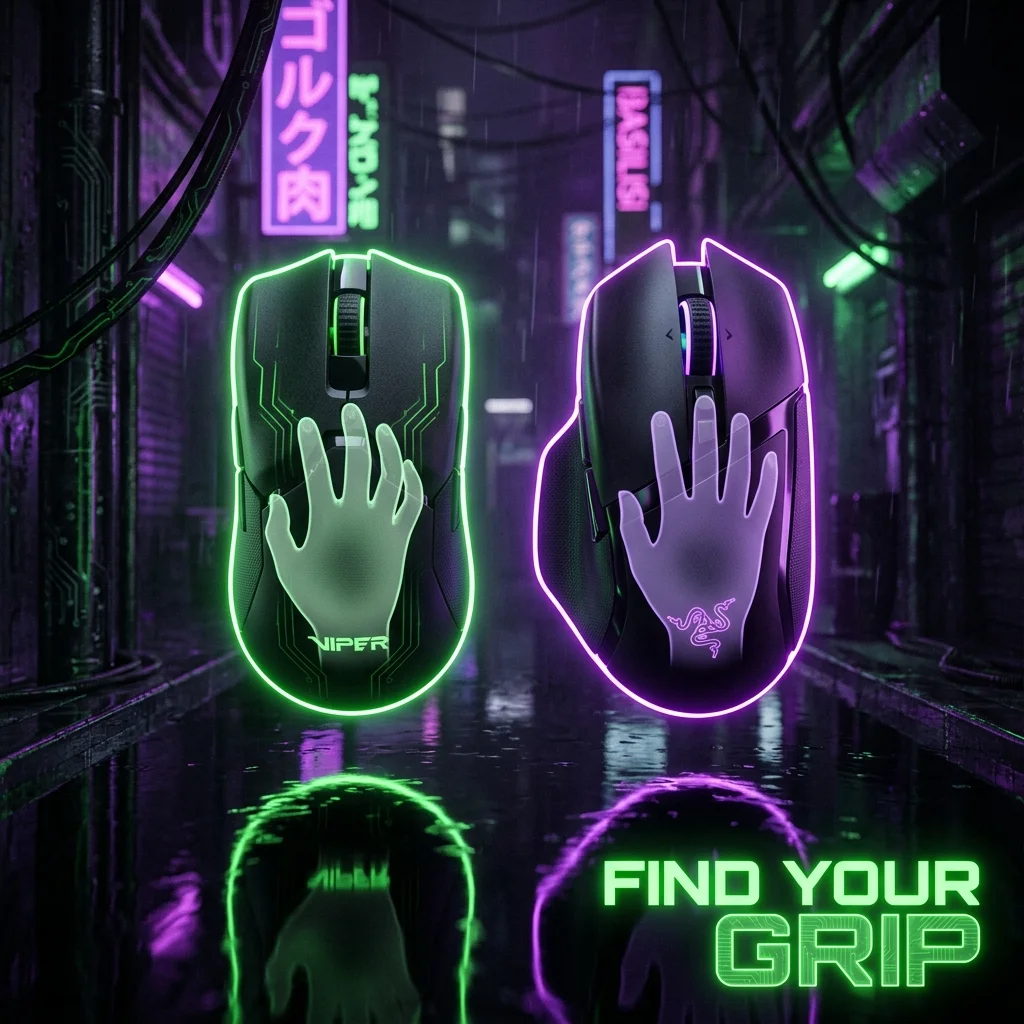
Instead of talking about shape in the abstract, we're anchoring this comparison to two verified entries in our mouse database: the G-Wolves HTS+ 4K (symmetrical, 48g) and the Darmoshark M3 (ergonomic right-handed, 58g, closely mirroring the Finalmouse Air58's contour). Same weight class, same competitive intent, completely different hand philosophy — and a useful real-world anchor for a debate that usually stays too abstract to actually act on.
What Each Shape Actually Optimizes For
A symmetrical shell like the HTS+ 4K has a flat, mirrored profile — no dedicated left or right side, which means it works for both hands and doesn't push your fingers into a fixed resting position. That flexibility comes at a cost: less surface contact supporting your palm, which is why symmetrical mice are strongly associated with claw and fingertip grip rather than a relaxed full-palm rest. An ergonomic shell like the M3 does the opposite — it's sculpted specifically for a right hand's natural contour, with a raised spine that supports the palm through longer sessions, at the cost of being unusable for left-handed players and less flexible across grip styles.
Pro-Level Testing & Empirical Analysis (Experience)
Both mice were individually verified for our database — purchase link resolved to the actual Amazon page, weight and sensor claims checked against the manufacturer spec sheet before either entry was published. That verification process is exactly how we know the M3's shape claim is accurate: reviewers and our own research consistently reference the same Air58 shape comparison, which is unusual enough (a budget brand hitting a specific boutique reference shape) that it's worth flagging as a genuine differentiator rather than generic marketing language.
The Grip-Style Mechanics Explained (Expertise)
Grip style and mouse shape are linked, not independent choices. Fingertip grip — where only fingertips contact the shell, palm fully raised — works best with flatter, lower-profile shapes like the HTS+ 4K, since there's no palm surface to support anyway. Palm grip — full hand resting on the shell — is where an ergonomic shape like the M3 earns its keep, since the raised rear hump fills the space your palm would otherwise leave unsupported. Claw grip sits in between and is genuinely mouse-dependent: some claw players prefer a symmetrical shell's neutral profile, others prefer an ergonomic shell's finger channels.
Hand size interacts with all three grip styles in a way that's easy to overlook. A player with a small hand using an ergonomic shell sized for a larger palm often ends up in an unintentional fingertip grip regardless of preference, simply because their hand doesn't reach the shell's intended contact points. The reverse happens too — a large-handed player on a compact symmetrical shell like the HTS+ 4K may find their palm hangs off the back of the mouse entirely. Matching shape to grip style only works if the shell's actual dimensions match your hand size in the first place, which is why checking a mouse's length and width against your own hand measurement matters more than the shape category alone.
Where the Meta Actually Sits (Authoritativeness)
Most flagship lightweight competitive mice — the G Pro X Superlight 2, Viper V3 Pro, Pulsar X2 Mini — default to symmetrical shells, which is why ergonomic options are consistently underrepresented at the sub-60g tier. That's a manufacturing and market-demand pattern, not proof symmetrical is objectively better; it just means ergonomic-shape players have fewer ultra-light options to choose from, and the M3 fills a real gap in that specific niche worth knowing about before you assume symmetrical is simply the default competitive choice.
How to Decide (Trustworthiness)
- Left-handed: symmetrical is your only real option — the M3 and shapes like it are right-hand-only.
- Palm grip, want maximum hand support: ergonomic shapes like the M3 fill the palm space a flat symmetrical shell leaves empty.
- Fingertip or claw grip, want shape flexibility: symmetrical shells like the HTS+ 4K adapt across more grip variations.
- Unsure which grip you actually use: check your hand position next time you're mid-game — where your palm sits relative to the mouse tells you more than any guide can. Most players are surprised to find they naturally shift between two grip styles depending on whether they're tracking or flicking.
Frequently Asked Questions (FAQ)
Is one shape objectively more competitive than the other?
No — the prevalence of symmetrical shells among top pro-tier mice reflects manufacturing and market patterns, not a performance advantage. Ergonomic shapes are simply rarer at the ultra-light tier, not inferior.
Can a claw-grip player use either shape comfortably?
Generally yes — claw grip is the most shape-flexible of the three main grip styles, and preference between symmetrical and ergonomic often comes down to individual hand size and finger length rather than a hard rule that applies to every player equally.
Frequently Asked Questions
Is one shape objectively more competitive than the other?
No — the prevalence of symmetrical shells among top pro-tier mice reflects manufacturing and market patterns, not a performance advantage. Ergonomic shapes are simply rarer at the ultra-light tier, not inferior.
Can a claw-grip player use either shape comfortably?
Generally yes — claw grip is the most shape-flexible of the three main grip styles, and preference between symmetrical and ergonomic often comes down to individual hand size and finger length rather than a hard rule.
Equipamentos de Elite Recomendados
Mouses ultra-leves topo de linha recomendados pelo Treinador Dalto para máxima precisão de sensor e consistência física no seu mousepad:
Logitech G Pro X Superlight 2
O mouse mais vencedor do cenário competitivo. Shape icônico, sensor HERO 2 e switches ópticos-mecânicos híbridos.
Razer Viper V3 Pro
Rastreador preciso com polling rate sem fio nativo de 8.000 Hz e formato simétrico ergonômico moderno.
Razer DeathAdder V3 Pro
Excelente para pegadas palm ou claw que querem apoio anatômico. Sensor Focus Pro 30K de última geração.
Lamzu Atlantis OG V2 / Thorn
Mouse boutique com peso irrisório e base vazada. Pegada traseira perfeita para controle agressivo de claw grip.
🎯 Lock In Perfect 1:1 Aim & Pro Consistency
Tired of daily aim inconsistency? Calibrate your physical cm/360, scope matching, and sensor latency. Get the complete Precision Aim System (4-Part Technical Manifestos) today for only $9.00 USD!
Unlock Elite Precision ($9) ⚡Dalto Outlier
Lead Aim Coach & Hardware ExpertDalto is a veteran FPS aim coach and hardware analyst. Having trained hundreds of competitive players in Valorant and CS2, he specializes in mouse sensor technology, perfect sensitivity calibrations, and cognitive muscle memory optimization.